This short guide helps U.S. shoppers reduce returns and fit frustration by walking through the shein sizing chart and practical steps to find your best fit. Use this SHEIN size guide to identify when to trust a label and when to rely on measurements.
We define the shein sizing chart as the set of measurements and labels each product page provides. This article covers measuring techniques, interpreting SHEIN’s charts, converting international sizes, reading product pages and reviews, and handling returns so you can make confident choices for dresses, tops, bottoms, and outerwear.
Anúncios
Expect a friendly, practical SHEIN fit tips approach with clear steps, checklists, and advice tailored to shoppers in the United States. The guide addresses a range of body types, including plus sizes, and shows why accurate body measurements beat assuming your retail size.
Remember that SHEIN’s sizing can vary by item and fabric. Save your measurements for future orders, consult the online clothing size guide on each product page, and use model stats and reviews to better find your SHEIN size.
Anúncios
Key Takeaways
- Measure your body and save measurements before shopping on SHEIN.
- Use the shein sizing chart on each product page, not just the letter or number size.
- Check fabric stretch and fit type as part of SHEIN fit tips.
- Convert international sizes carefully and rely on measurements over regional labels.
- Read customer reviews and photos to confirm how an item fits in real life.
Why Understanding SHEIN Sizing Matters for Online Shopping
Shopping online for affordable fashion can save time and money, but sizing can feel risky. Fast-fashion sizing differences show up when brands use various factories, pattern grading methods, and target markets. That means a size labeled M at SHEIN might not match an M at H&M, Zara, or ASOS.
Many shoppers see inconsistent fits and suspect vanity sizing or regional manufacturing variances. Reviewers often flag mismatched measurements, which makes checking each listing essential. Noticing patterns in reviews and photos gives a clearer sense of how an item runs.
Using a product-specific size guide removes much of the guesswork. SHEIN posts dimensions for bust, waist, hip, and other points for each item. That way you can compare your measurements to the exact garment instead of assuming a universal fit.
- Why use a sizing chart: maps body numbers to letters or numeric labels, helping you pick the closest match.
- Reduce returns SHEIN: accurate selection lowers the chance you’ll need to send items back.
Better fit brings practical benefits. Properly fitting bras and swimwear support comfort and confidence. Dresses that match your measurements hang correctly. Outerwear that fits allows room for layers without looking bulky.
Fewer returns save time and money, and they keep your ordering experience smooth. When you check sizing charts and review photos, you cut down on surprises and make smarter choices on first try purchases.
| Issue | What to Check | Practical Outcome |
|---|---|---|
| SHEIN size inconsistencies | Compare item dimensions to your measurements | Pick size that matches body, not label |
| fast-fashion sizing differences | Read reviews for fit patterns across brands | Avoid surprises when switching labels |
| why use a sizing chart | Use product-specific charts on each page | Reduce guesswork and choose accurate sizes |
| reduce returns SHEIN | Measure, compare, and study customer photos | Save time, money, and hassle with fewer returns |
shein sizing chart
Finding the right size on SHEIN starts with understanding how the brand lists measurements. A clear shein sizing chart shows both letter and numeric options, plus extended ranges for fuller figures. Read product pages carefully to see whether sizes use XS to XXL shein labels, numeric values, or plus-size markers like 1X–3X.
Breakdown of typical size categories
Most listings follow XS, S, M, L, XL, XXL as the standard range. Many dresses, tops, and bottoms will show XS to XXL shein sizing alongside a numeric equivalent such as 2, 4, 6. For plus-size shoppers, a shein plus size chart often uses 1X, 2X, 3X or 0X–4X depending on the item. Pay attention when sizes are labeled in US numbers because garments can run small.
How bust, waist, and hips translate to fit
Bust waist hip measurements are the core data to pick a size. The bust measurement guides tops and dresses. The waist measurement matters for skirts and waistbands. The hip measurement is key for pants and fitted skirts. SHEIN product pages frequently list garment dimensions in inches or centimeters so you can compare those values to your own measurements.
Interpreting labels and fit notes
Letter sizes are shorthand for a measurement range rather than one exact value. Numeric sizes sometimes reflect US sizing but can vary by style. Always cross-check any letter or number label against the page’s bust waist hip measurements. Many items include fit notes that say whether a piece fits true to size, runs small, or runs large, plus a stretch percentage for the fabric.
| Size Label | Typical US Equivalent | Common Bust (in) | Common Waist (in) | Common Hip (in) |
|---|---|---|---|---|
| XS | 0–2 | 31–32 | 24–25 | 33–34 |
| S | 4–6 | 33–34 | 26–27 | 35–36 |
| M | 8–10 | 35–36 | 28–29 | 37–38 |
| L | 12–14 | 37–39 | 30–32 | 39–41 |
| XL | 14–16 | 40–42 | 33–35 | 42–44 |
| XXL | 16–18 | 43–45 | 36–38 | 45–47 |
| 1X | 14–16 (plus) | 44–46 | 37–39 | 46–48 |
| 2X | 18–20 (plus) | 47–49 | 40–42 | 49–51 |
| 3X | 22–24 (plus) | 50–52 | 43–45 | 52–54 |
Because tall and petite options are limited, rely on exact garment measurements rather than size names. Use your own bust waist hip measurements to match the garment dimensions shown. That keeps sizing decisions accurate across styles and helps you avoid returns.
How to accurately measure your body at home
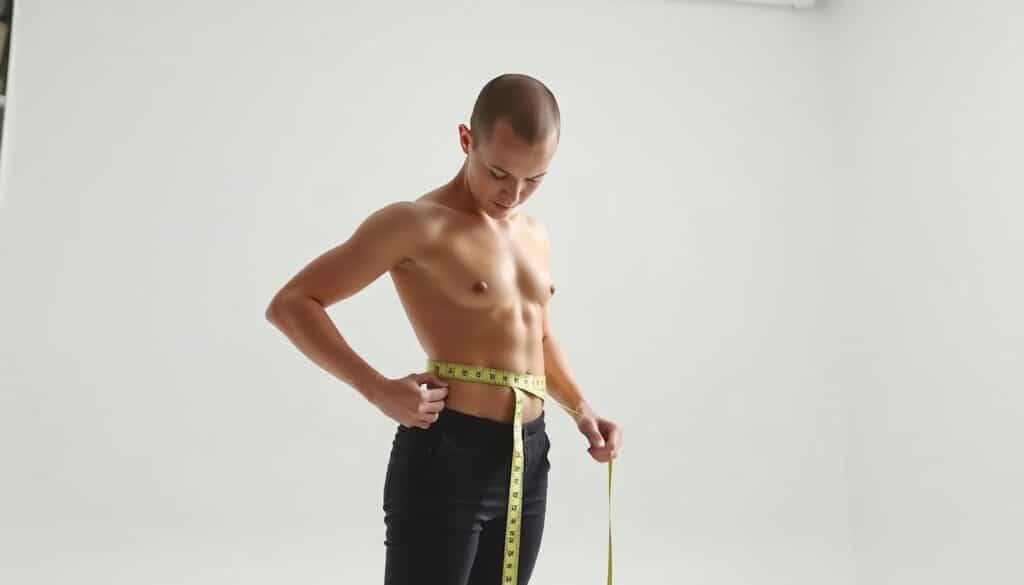
Getting consistent measurements makes online shopping easier. This short guide shows what tools to gather, how to measure key points, and common mistakes to avoid when you measure body for SHEIN.
Tools you need
Collect a flexible cloth tape measure, a full-length mirror, a friend to help for accuracy, and a notepad or smartphone to record numbers. Wear thin clothing or underwear so measurements sit close to the body. A helper improves precision when measuring hard-to-reach areas.
Step-by-step measuring
Follow these directions when you learn how to measure bust waist hips and other points. Keep the tape snug but not tight and breathe normally while you record each number.
1. Bust: Wrap the tape at the fullest point of the chest. Hold the tape parallel to the floor and avoid pulling it too tight. Record the number in inches or centimeters.
2. Underbust: Measure directly under the breasts. This helps with bra-fitting items and tops that list underbust measurements.
3. Waist: Find your natural waist at the smallest part of your torso. Do not measure where pants usually sit. Keep posture neutral and tape level all around.
4. Hips: Measure around the fullest part of the hips and buttocks. Stand with feet together and wrap the tape so it stays parallel to the floor.
5. Inseam: Measure from the crotch to the desired hem for pants. If possible, measure a pair of well-fitting pants for the length you prefer.
6. Arm length: Measure from the shoulder point down to the wrist for long sleeves. Bend the elbow slightly to allow for movement.
Recording and conversion
Note each measurement like this: bust 36″, waist 29″, hips 40″. Convert units when needed if a SHEIN chart uses inches or centimeters. Save these numbers in your account profile for quick reference on future orders.
Common measuring mistakes and how to avoid them
Avoid measuring over bulky clothing. Tilted tape or uneven placement creates errors. Measure twice and take the larger number if you fall between sizes. If you get different results, ask a friend to re-check while you stand naturally.
| Measurement | How to measure | Tip |
|---|---|---|
| Bust | Wrap tape at fullest point, parallel to floor | Wear a non-padded bra for best shape |
| Underbust | Measure directly beneath breasts | Useful for fitted tops and bras |
| Waist | Measure at natural waist, smallest part | Do not measure at pant waistband |
| Hips | Wrap around fullest part of hips and buttocks | Stand with feet together for accuracy |
| Inseam | From crotch to desired hem | Measure a favorite pair of pants if possible |
| Arm length | From shoulder point to wrist | Bend elbow slightly for comfort allowance |
Converting international sizes to match SHEIN measurements
SHEIN serves shoppers around the world and often lists US, UK, EU, and AU sizes on product pages. These regional labels offer a quick guide, but they can differ by brand and by garment. To convert sizes to SHEIN accurately, focus on the garment measurements in the listing rather than relying only on letter or regional names.
Below are common equivalencies to help with a rough conversion: US 4 ≈ UK 8 ≈ EU 36, US 6 ≈ UK 10 ≈ EU 38, US 8 ≈ UK 12 ≈ EU 40. Treat these as approximations only. Use them when you need a quick reference for US to EU size conversion, but double-check measurements on the product page before ordering.
Use a measurement chart that lists bust, waist, hip, and inseam in inches or centimeters. That method beats trusting regional labels because SHEIN international sizing can vary with the factory grading. Match your own measurements to the garment’s flat measurements to convert sizes to SHEIN with confidence.
For shoppers in the United States, select the US size option on SHEIN when the site offers it. Look for measurements given in inches and note model stats and the size the model wore. Many items follow Asian grading and may run smaller, so consider sizing up if you fall between two sizes or if the fabric has limited stretch.
Browser extensions, SHEIN size converter tools, and saved measurement charts make repeat orders easier. When possible, consult customer photos and review notes about fit to refine your choice. These steps reduce guesswork when you convert sizes to SHEIN and navigate US to EU size conversion for international shopping.
Material, fit type, and style — how they affect the size you choose
Picking the right size on SHEIN goes beyond numbers. Fabric composition, fit labels, and the garment’s style work together to change how an item will feel and hang. Learn to read those signals so you can pick with confidence when choosing SHEIN size by style.
How fabric stretch and composition change fit expectations
Look at the fabric list on a product page. Cotton, linen, polyester, and rayon usually have low natural stretch. A small amount of spandex or elastane can make garments much more forgiving. Knit fabrics often feel bouncier and adapt to curves. Woven fabrics sit firmer and require more precise measurements.
Linings and structured construction alter fit. A lined dress or blazer keeps its shape and may not give even if the outer fabric has stretch. A corset-style piece follows exact dimensions and sometimes needs tailoring for comfort.
Fit type definitions
SHEIN often tags garments with fit types. Understanding those labels helps you decide whether to follow your measurements or adjust them.
- Slim: Body-skimming. Choose your exact size or size up for ease.
- Regular: Standard cut. Follow your measurements for a true fit.
- Relaxed: Roomier shape. You can size down for a closer look.
- Oversized: Intentionally large. Size down if you prefer less volume.
These fit types explained in product notes help you avoid surprises at delivery.
How different styles require different fitting approaches
Dresses need attention to bust, waist, hips, and length. A fitted sheath demands precise numbers. A wrap or A-line dress lets you be more flexible when choosing SHEIN size by style.
Tops depend on shoulder width and bust. For tight tops, use bust measurement. For loose blouses, check sleeve length and hem measurements.
Bottoms center on waist and hip. Note rise, whether the waist is elastic, and how the leg shape affects fit. High-rise styles sit differently than low-rise ones.
Outerwear must leave space for layers. Prioritize shoulder width and sleeve length. Structured jackets and blazers may need your exact measurements or tailoring for a polished look.
| Garment Type | Key Measurements | Fit Advice |
|---|---|---|
| Dresses | Bust, waist, hips, length | Use exact bust and hip numbers for fitted styles; size flexibility for wrap or A-line cuts |
| Tops | Bust, shoulder width, sleeve length | Follow bust for fitted tops; allow extra for drop-shoulder or relaxed blouses |
| Bottoms | Waist, hips, rise, inseam | Prioritize waist for non-elastic waists; size up for narrow rise or rigid denim |
| Outerwear | Shoulder, chest, sleeve length | Allow room for layers; choose true size for tailored coats, size up for oversized styles |
| Structured/Lined Pieces | All relevant measurements plus internal construction | Rely on precise measurements; consider professional tailoring for best fit |
Reading product-specific size charts and customer reviews
When you shop on SHEIN, the product page is your best ally for fit. Look for the “Size & Fit” or “Size Chart” tab just under the product title or near the details. Many listings include a garment measurement table and suggested body measurements that align with the SHEIN product size chart. Use those numbers as a starting point rather than guessing from a letter size alone.
Customer photos give context that charts cannot. Scan images to see how the item sits on different body shapes and heights. Pay attention to reviewers who list their height, weight, and the size they ordered. Those real-world visuals provide customer photo sizing clues that often reveal sleeve length, waist fit, and if a style runs cropped or long.
Read review comments for recurring notes on fit. If many shoppers mention the piece runs small at the bust or generous at the hips, that pattern matters. Filter reviews by size or fit when possible so you compare notes from people with measurements close to yours.
Count the number of reviews and prefer recent ones with clear photos and measurement details. A single flattering photo is less useful than several reviewers reporting the same issue. Use those trends in SHEIN reviews sizing to decide whether to size up, size down, or order two sizes to compare.
Combine the product table data with user feedback for the best result. Match your body measurements to the garment measurements on the chart. Then check customer photo sizing clues and review patterns to fine-tune your choice before checkout.
| Where to Look | What to Check | How to Use It |
|---|---|---|
| Size & Fit / Size Chart tab | Garment measurements, recommended body sizes | Compare your measurements to garment numbers |
| Customer photos | Body shape, height, visible fit points (bust, waist, length) | Use images to judge real-world drape and length |
| Review text and filters | Notes on running small/large, sleeve and hem issues | Look for repeated comments to spot reliable trends |
| Recent, detailed reviews | Measurements, weight, height, clear photos | Prioritize these when adjusting your size choice |
How to handle size discrepancies and returns
The thrill of an online find can fade when sizing is off. Use the next steps to sort mismatches quickly and keep future orders on track. Follow rules on packing, timing, and communication to reduce delays with refunds or exchanges.
SHEIN’s return policy overview and timeframes for the United States
SHEIN’s return policy US allows most full-price items to be returned within the allowed window. Start returns through the app or website to meet time limits. Note that some items, such as certain lingerie, swimwear, or final sale pieces, may not be eligible for return, so check the product page before you buy.
Steps to take when an item doesn’t fit: exchanges, returns, and alterations
Log into your SHEIN account and open your order details. Select the items you want to return and pick a reason that matches the issue.
Choose your preferred refund method when prompted and follow instructions to print a prepaid label or use the provided return option. Keep tags attached and pack items unworn and unwashed to meet return requirements.
If an exchange is faster for you, request exchange SHEIN US where available. For small fit issues, consider local tailors. Alterations can be cheaper and quicker than a full return for minor adjustments.
Tips to avoid return fees and streamline the process
Inspect the return window and return items SHEIN policies before purchasing. Save original packaging and receipts to make returns smoother. Take clear photos of any flaws or fit problems to send to customer service; this speeds approval for damaged or misdescribed items.
Consolidate returns when possible to meet any minimums for a free return label. Track your shipment and keep the tracking number as proof. Refunds usually go back to the original payment method within the timeframe stated by SHEIN; keep an eye on your bank or PayPal account.
| Issue | Action | Expected outcome |
|---|---|---|
| Wrong size delivered | Open order, select item, choose return reason, upload photos if needed | Return approved, refund or exchange SHEIN US processed |
| Doesn’t fit but in good condition | Initiate return within the policy window, attach tags, pack securely | Refund to original payment method after processing |
| Minor fit issue | Compare cost of local alteration vs. return; choose quicker option | Altered item kept, or return completed with refund |
| Damaged or misdescribed | Contact customer service, provide photos and order details | Priority review and faster refund or replacement |
| Want to avoid fees | Check return items SHEIN rules, consolidate returns, keep tags | Lower chance of fees and faster processing |
Practical size-picking tips and a quick checklist before checkout
Choosing the right fit on SHEIN can cut returns and boost confidence with every order. Start with clear rules of thumb for how to pick SHEIN size so you make fast, reliable calls while shopping.
Size up when your measurements sit near the upper limit of a size range. Pick a larger size if the fabric has no stretch or if the listing calls the item slim fit. Size down when the design is oversized or relaxed and you want a closer silhouette. These simple calls help you decide whether to size up or down SHEIN for a particular piece.
Quick pre-checkout checklist
- Measure bust, waist, and hips and compare each to the item chart before adding to cart.
- Read the product description to note fabric type and fit style.
- Scan reviewer photos and size comments for common fit patterns.
- Check the model’s height and the size they wear to visualize length and proportion.
- Look at garment measurements like length, sleeve, and rise to ensure preferred coverage.
- Confirm the return policy for that item so you know your options if the fit is off.
Saving your measurements for faster future orders
Create a profile on SHEIN and enter body measurements when the site offers the option. Keep a backup in a notes app or spreadsheet so you can copy numbers quickly. Use browser autofill to speed up checkout if you prefer. Store separate entries for layering, winter coats, or fitted summer pieces.
Keep a running list of brands and specific sellers within SHEIN that match your proportions. That list becomes a go-to reference and shortens decision time on repeat buys.
| Body Measurement | Typical Range (in) | Recommended Size |
|---|---|---|
| Bust | 31–33 | S |
| Waist | 25–27 | S |
| Hips | 34–36 | S |
| Bust | 34–36 | M |
| Waist | 28–30 | M |
| Hips | 37–39 | M |
| Bust | 37–39 | L |
| Waist | 31–33 | L |
| Hips | 40–42 | L |
Conclusion
Accurate body measurements combined with careful reading of SHEIN’s product-specific size charts and reviews are the most reliable way to find your perfect fit SHEIN. Take clear inch-based measurements for bust, waist, hips, and inseam, then match those numbers to the chart on each product page rather than relying on letter sizes alone. This shein sizing chart conclusion emphasizes measurement first, labels second.
Practical steps make ordering easier: measure, compare, consider fabric stretch and fit type, and consult customer photos and comments. For U.S. shoppers, remember to size up when in doubt, check inches rather than regional names, and watch for items that tend to run small. These final fitting tips help reduce surprises and improve the odds your new pieces will fit well right away.
Save your measurements and use the quick checklist before checkout: measure, read the product chart, note fabric and fit, and scan reviews. If something still doesn’t fit, use SHEIN’s return process, but aim to cut returns by applying the guidance here. With the shein sizing chart conclusion and these final fitting tips, shoppers in the United States can confidently buy trending pieces and build a better-fitting wardrobe.
FAQ
What is the purpose of this SHEIN sizing chart guide?
What does “shein sizing chart” mean and why should I use it?
How do SHEIN sizes like XS to XXL and plus sizes usually translate to body measurements?
What tools do I need to measure myself accurately at home?
How do I measure bust, waist, hips, inseam, and arm length correctly?
What are the most common measuring mistakes to avoid?
How do I convert international sizes (US, UK, EU, AU) to match SHEIN?
Should I trust regional size names or rely on measurement charts?
How does fabric and fit type affect which size I should choose?
What style-specific fit tips should I use for dresses, tops, bottoms, and outerwear?
Where can I find size charts on SHEIN product pages?
How do I use customer photos and reviews to decide on size?
What steps should I take if an item doesn’t fit when I receive it?
What is SHEIN’s general return policy for U.S. shoppers?
How can I avoid return fees and make returns easier?
When should I size up or size down based on my measurements?
What quick checklist should I complete before hitting checkout?
How do I save my measurements for faster future orders?
Are there U.S.-specific tips for buying from SHEIN?
How do I interpret numeric vs. letter size labels on SHEIN product pages?
Do plus sizes on SHEIN match U.S. plus sizing?
Content created with the help of Artificial Intelligence.